

The Complete Guide to Iron & Steel Door Quality
Home » The Complete Guide to Iron & Steel Door Quality

Scroll To Explore

Not all iron and steel doors are built the same.
The gap between a door that holds up for decades and one that warps, rusts, or falls apart within a few years comes down to decisions most homeowners never see — the steel grade, the weld quality, how the frame and transom are engineered, and whether the finish was applied as an afterthought or built into the process.
Love That Door® manufactures iron doors and steel entry doors from four showrooms in Dallas, Frisco, Fort Worth, and Grapevine. We own our factories, control every specification, and back every door with a lifetime warranty on the frame and slab.
This guide covers everything you need to know before buying an iron or steel door in DFW — from materials and construction to finishes, hardware, pricing, and the engineering decisions that determine whether your door lasts 5 years or 50.
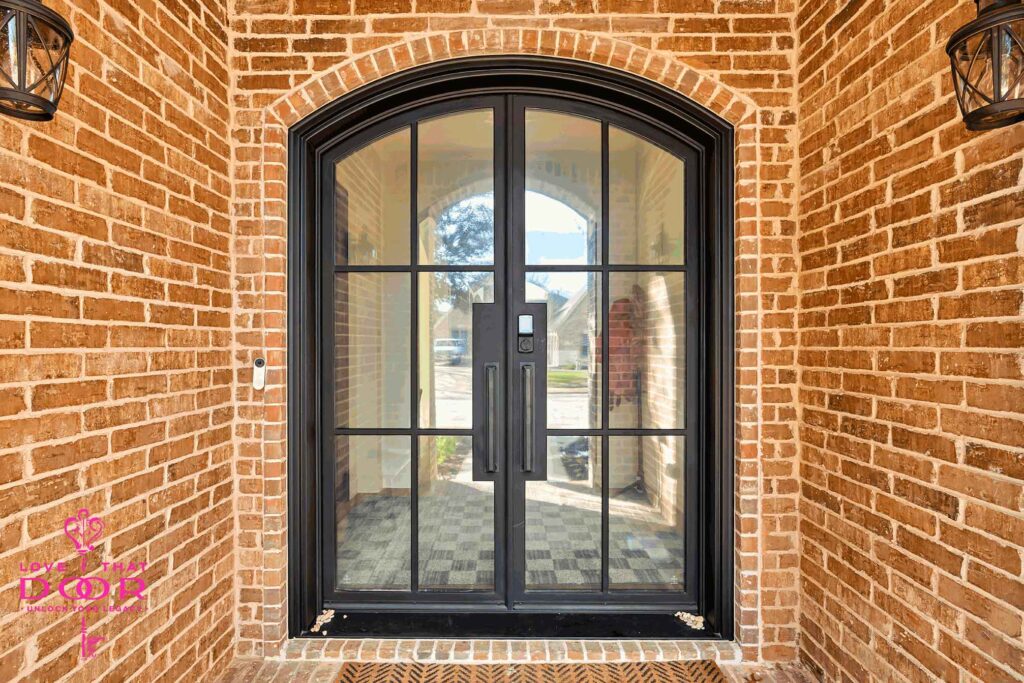
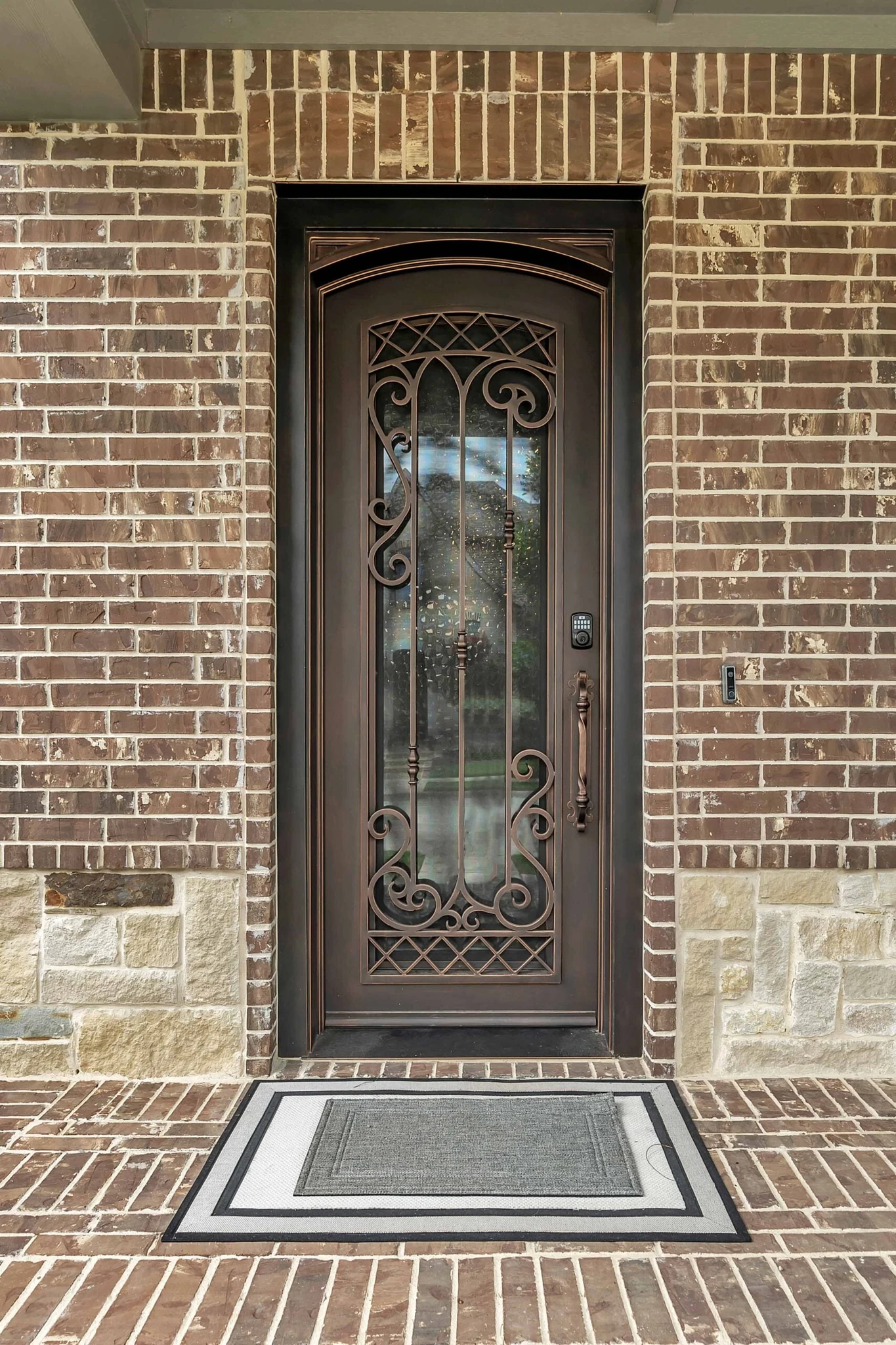
Why Iron & Steel for Your Front Door?
Wood rots. Fiberglass cracks and fades. Aluminum dents.
Iron and steel entry doors are the only material class that delivers structural strength, security, thermal mass, and design flexibility in a single product. A properly built iron door resists forced entry, handles Texas heat and storm cycles, and makes a visual statement that no other material can match.
But the material alone doesn’t guarantee quality. The construction method, the steel grade, the welding technique, the finish system, and the hardware all determine whether you’re getting a door that performs — or an expensive problem you’ll be replacing in under a decade.
That’s what this guide is about. Not marketing. Engineering.
Steel Grades —
What's Actually Inside Your Door
Most iron door companies don’t tell you what gauge steel they use. There’s a reason for that.
The industry standard for cheap imported doors is 14-gauge steel — thin enough to flex under hand pressure and prone to denting during installation. Some manufacturers use 16-gauge, which is even thinner.
Love That Door® uses 10-gauge cold-rolled steel exclusively. It’s nearly twice as thick as 14-gauge, significantly more rigid, and provides the structural integrity needed for doors that weigh 300-800+ pounds. Cold-rolled steel also has a smoother surface finish than hot-rolled, which means cleaner paint adhesion and a better final product.
Why it matters to you: Thicker steel means no flexing, no denting, no warping. It means a door that stays square in the frame for decades — not months. How Much Do Iron Doors Cost?→

How Iron & Steel Doors Fail — And How to Prevent It
Most iron door problems are predictable and preventable. The issues homeowners run into — rust creep, warping, glass seal failure, frame separation — trace back to a small set of construction shortcuts common across the industry.
The five most common failure points:
- Rust creep at welds — improperly prepped welds trap moisture underneath the finish, creating corrosion that spreads invisibly behind the paint
- Frame and transom separation — doors built in pieces and assembled on-site create joints that shift, gap, and eventually leak
- Glass seal failure — cheap IGU (insulated glass units) lose their seal within 5-7 years, fogging between the panes
- Thermal warping — doors not engineered for thermal expansion bind in summer and gap in winter
- Finish breakdown — single-coat paint over raw steel has no primer bond and breaks down under UV and moisture exposure
Understanding these failure points before you buy is the single best thing you can do to protect your investment.
Book your FREE in-home or showroom consultation today—we'll measure your space, explore custom designs, and bring your vision to life!
Get a FREE quote! Share your measurements or a photo of your space, and our design experts will send you a personalized price estimate.
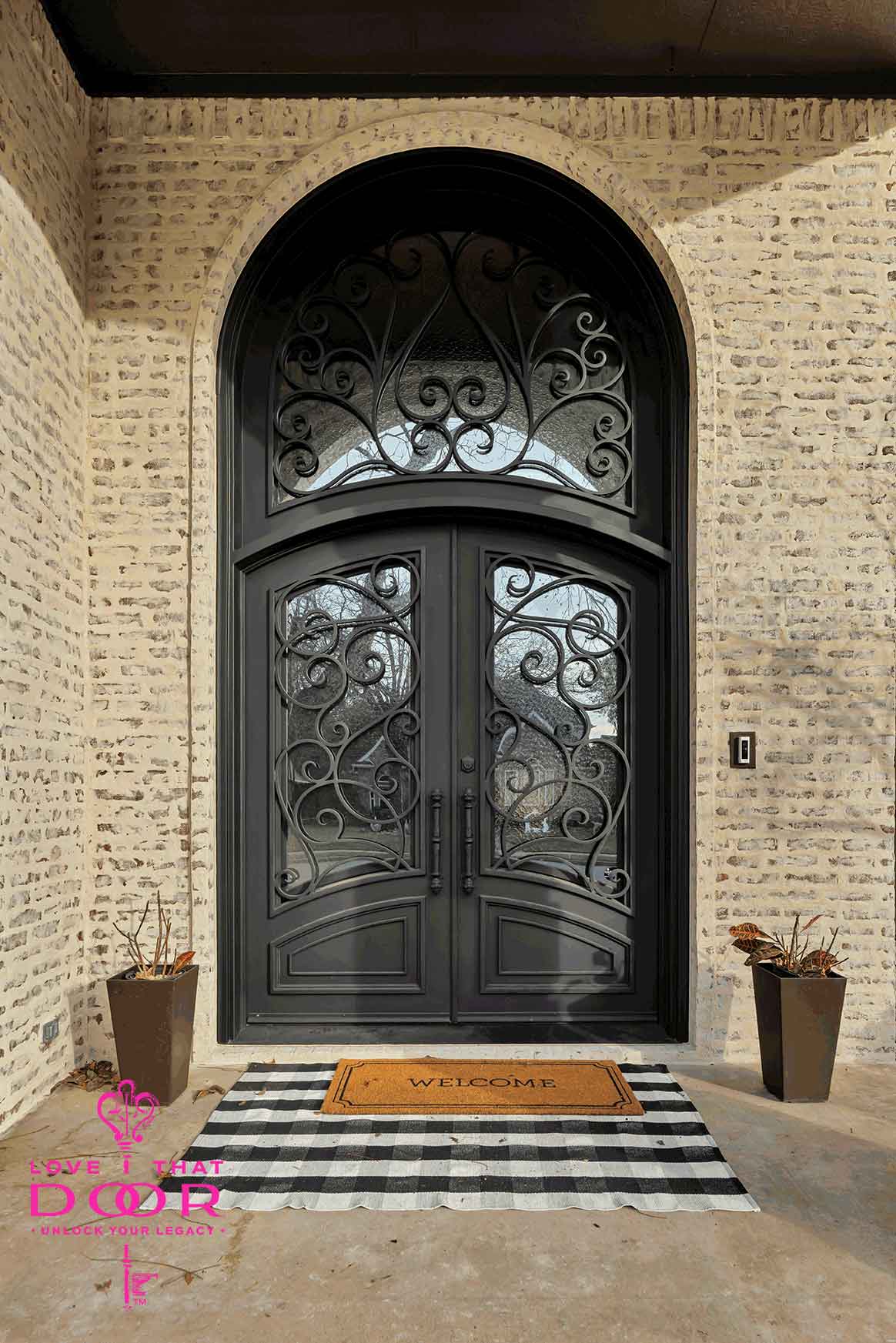
One-Piece Construction — Why Separate Pieces Fail
When a door and its transom are built separately and assembled on-site, you introduce a joint. Joints fail.
Over time, differential movement, thermal stress, and settling work against any connection that wasn’t engineered as a single unit. A one-piece door-and-transom assembly isn’t just cleaner aesthetically — it’s structurally more sound and dramatically easier to weatherseal.
Love That Door® holds a patent on continuous structural tube construction. The frame, door, and transom are built as one integrated unit — no field joints, no weak points, no seams for water to penetrate.
This is the single biggest engineering decision in iron door manufacturing. Most companies skip it because it’s harder and more expensive to build this way. We don’t skip it because it’s the only way to build a door that lasts.
Read the full deep dive: Why Your Door and Transom Should Be One Piece →
Thermal Expansion —
The Texas Problem No One Talks About
Texas summers push exterior metal through extreme thermal cycles — sometimes 50°F of swing in a single day.
Steel expands and contracts. Doors that weren’t designed for this will bind in summer, gap in winter, and eventually stress their welds and seals to failure. South-facing doors take the worst punishment — direct afternoon sun can push surface temperatures past 150°F.
Love That Door® engineers every door for the thermal reality of Texas. Our patented construction method accounts for expansion tolerances, and our finish system is designed to flex with the steel rather than cracking and peeling.
If you’re buying an iron door in DFW and the manufacturer can’t explain how their door handles thermal cycling — that’s a red flag.
Read the full deep dive: Thermal Expansion and Iron Doors in Texas →
The Finish Tells You Everything
The finish on an iron or steel door is more than cosmetic — it’s diagnostic.
Visible welds, inconsistent texture, and paint that sits on top of raw steel rather than bonding to a properly prepared surface all signal shortcuts in fabrication. A clean finish is the result of clean construction, not just a better paint job.
Love That Door® uses a triple-coat finish system:
- Zinc primer — bonds to the steel at a molecular level, creating the first corrosion barrier
- Epoxy intermediate coat — adds chemical resistance and adhesion strength
- Polyurethane topcoat — UV-stable, weather-resistant, and designed to maintain color and gloss for years
This isn’t house paint sprayed over bare metal. It’s an engineered finish system built for Texas weather.
Read the full deep dive: What Your Door’s Finish Reveals About Its Quality →
Iron Door Styles —
Find Your Door
Love That Door® manufactures every major iron door configuration. Each is built with 10-gauge cold-rolled steel, patented one-piece construction, and our triple-coat finish system.
Single Iron Doors
The classic statement entry. One door, one frame, maximum impact. Available in every design from traditional scrollwork to clean modern lines.
Double Iron Doors
The grand entrance. Two doors, wider opening, and the architectural presence that defines a home’s character from the street.
Pivot Doors
Oversized, dramatic, and engineered to rotate on a central pivot point instead of side hinges. Pivot doors can reach 10+ feet tall and weigh over 800 pounds — yet open with one hand.
Doors with Transoms
A transom window above the door adds natural light and vertical presence. When built as a one-piece unit with the door (as Love That Door® does), it’s structurally superior and completely weathersealed.
Doors with Surrounds
Full sidelights flanking the door create a wall of iron and glass that transforms the entire entryway.
Doors with Sidelights
Sidelights add glass panels beside the door for natural light without the full surround treatment.
What Separates Love That Door® from Everyone Else
We own our factories. Most iron door companies are resellers — they order from factories they don’t control and hope the product arrives as promised. Love That Door® owns its manufacturing facilities. We control every specification, every material, every process, and every quality standard.
We hold the patent. Our continuous structural tube construction method is patented. It eliminates field joints and creates a one-piece integrated system that other manufacturers can’t replicate.
We use 10-gauge exclusively. No mixed gauges, no cost-cutting on hidden components. Every structural element of every door is 10-gauge cold-rolled steel.
We finish in three coats. Zinc primer, epoxy intermediate, polyurethane topcoat. The industry standard is one coat of paint over bare metal.
We install with our own team. No subcontractors. The people installing your door understand how it was built, how it should be sealed, and how to calibrate it for perfect operation.
We back it with a lifetime warranty. Frame and slab — lifetime. Finish — 10 years. Glass — manufacturer warranty. Hardware — manufacturer warranty.
Iron Door Giudes
Each guide below goes deep on a specific topic. If you’re serious about buying an iron door, these are worth reading.
- How Iron & Steel Doors Fail — And How to Prevent It
- Why Your Door and Transom Should Be One Piece
- Thermal Expansion and Iron Doors in Texas
- What Your Door’s Finish Reveals About Its Quality
- Iron vs Fiberglass vs Wood: The Honest Comparison
- 5 Best Iron Door Companies in Dallas — What to Look For
- 7 Things to Check Before You Buy an Iron Door
- How Much Do Iron Doors Cost in Texas
- What Makes a Steel Entry Door Custom?
- Narrow vs. Wide Steel Entry Doors: Custom Width Options
Coming soon:
- Do Iron Doors Add Home Value?
- How Long Do Iron Doors Last?
- Iron Door Design Ideas for Modern Homes
- Hand-Forged Scrollwork: What It Is and Why It Matters
- Iron Door Hardware Guide
Visit a Showroom — See the Difference in Person
The best way to understand iron door quality is to stand in front of one. Visit any of our four DFW showrooms to see our doors up close, ask questions, and compare construction firsthand.
- Dallas Showroom — 1322 Round Table Dr, Dallas TX 75247
- Frisco Showroom — 2429 Preston Rd, Ste. 400, Frisco TX 75034
- Fort Worth Showroom — 9100 N Fwy, Suite 100, Fort Worth TX 76177
- Grapevine Showroom — 129 S Main St, Ste 150, Grapevine TX 76051
Book your FREE in-home or showroom consultation today—we'll measure your space, explore custom designs, and bring your vision to life!
Get a FREE quote! Share your measurements or a photo of your space, and our design experts will send you a personalized price estimate.
Frequently Asked
Questions
01.
How much do iron doors cost?
Iron door pricing varies based on size, design complexity, glass options, and hardware. A quality single iron door typically starts around $3,500-$5,000 installed, while double doors with transoms or surrounds can range from $7,000-$15,000+. The key is understanding what’s included — steel gauge, finish system, hardware quality, and installation.
02.
What is the difference between iron and steel doors?
In the door industry, “iron” and “steel” are often used interchangeably. Most “iron doors” are actually made from steel — specifically carbon steel or cold-rolled steel. Wrought iron (hand-forged) is used primarily for decorative scrollwork and accents. Love That Door® uses 10-gauge cold-rolled steel for all structural components, which is stronger and more consistent than traditional wrought iron.
03.
How long do iron doors last?
A properly built and finished iron door should last 30-50+ years with minimal maintenance. The lifespan depends entirely on construction quality — steel gauge, weld preparation, finish system, and weather sealing. Cheap iron doors with single-coat paint over raw steel can start showing rust within 3-5 years. Love That Door® backs every door with a lifetime warranty on the frame and slab.
04.
Do iron doors add value to a home?
Yes. A quality iron entry door is one of the highest-ROI exterior upgrades a homeowner can make. Entry door replacements consistently rank in the top 5 home improvements for resale value. Beyond ROI, iron doors dramatically improve curb appeal and are one of the first things buyers notice when they pull into the driveway.
05.
Are iron doors energy efficient?
Iron and steel are conductive metals, so energy efficiency depends on the door’s engineering — specifically the glass package and weather sealing. Love That Door® uses insulated glass units (IGUs) with LOW-E coating and argon gas fill, plus EPDM gasket perimeter sealing. The result is a door that controls heat transfer while delivering the structural benefits of steel.
06.
Can iron doors be customized?
Absolutely. Love That Door® manufactures custom iron doors in virtually any size, configuration, and design. Single doors, doubles, pivots, transoms, surrounds, sidelights — every door is built to your specifications. Because we own our factories and control the manufacturing process, custom work doesn’t mean longer lead times or inflated pricing. Visit any of our four DFW showrooms to start designing your door.